
Company Reports
First Holdco Posts Lower Profit of N289Bn Despite N1.44 trillion Interest Surge

Published
8 months agoon
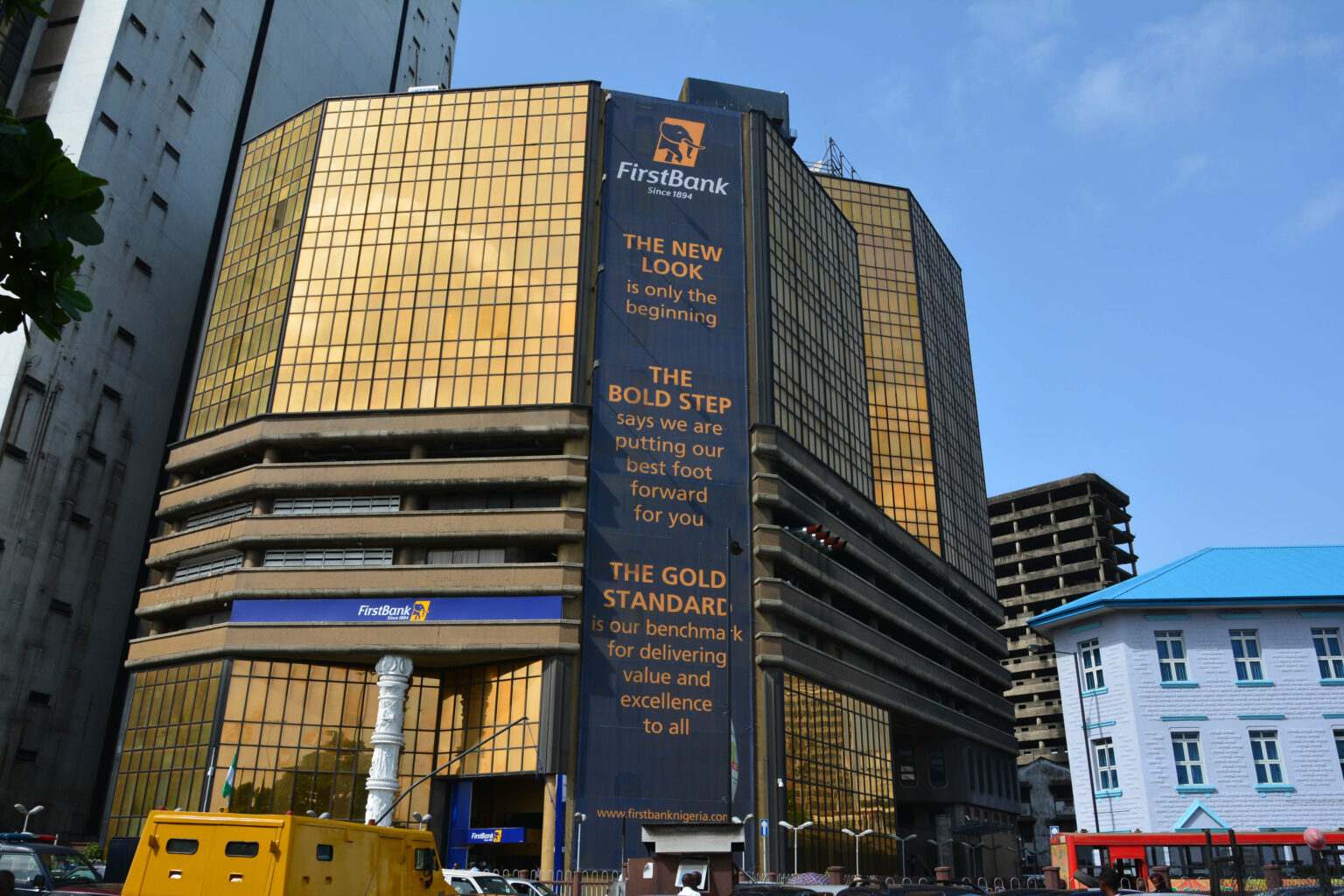
First HoldCo Plc has reported an after-tax profit (PAT) of N289.8 billion for the half-year ended June 30, 2025, a 20.7% decline from the N365.3 billion posted in the same period last year.
This decline, despite higher operating income, was largely due to a fall in fair value gains on financial instruments.
Read Also:
An analysis of the group’s unaudited financial statements shows that the major driver of profitability during the period was a surge in interest income, which grew by 51.7% to N1.44 trillion from N947.7 billion in H1 2024.
Analysts at CSL Stockbrokers Research said the rise in income was driven by the sustained high-yield environment.
Interest expense also rose sharply by 23% to N532.6 billion, as the cost of funding increased due to monetary tightening. Despite this, net interest income climbed 75.7% to N904.8 billion, positioning interest income as the group’s main earnings pillar.
However, the holding company faced significant headwinds on other income lines. Net losses from financial instruments held at fair value through profit or loss amounted to N53.7 billion, a reversal from a N432.2 billion gain recorded in the same period last year.
This was largely due to valuation losses amid volatile capital market conditions and exchange rate adjustments. Foreign exchange revaluation contributed a modest N73.5 billion gain, reversing a N165 billion loss in the previous year.
Fee and commission income rose 29.7% to N168.6 billion, showing the strength of the group’s transaction banking and digital services. However, fee-related costs also increased, reducing the net benefit. Dividend income grew to N10.2 billion, up 27% year-on-year.
“Net fee and commission income grew moderately, up 25.1% y/y and 16.4% q/q. Except for credit-related fees, brokerage & intermediation fees, and fund management fees, all other Fee and Commission Income lines showed y/y growth,” CSL disclosed.
On the cost side, First HoldCo saw an uptick in its impairment charges, which more than doubled to N185.4 billion, up from N93 billion in H1 2024. This reflects both a cautious outlook on credit risk and a growing loan book. Total operating expenses increased by 23.5% to N552.8 billion, led by a jump in personnel costs to N170 billion and other operational expenses, which rose to N347.4 billion, due to inflationary pressures and the higher cost of doing business.
The group’s pre-tax profit came in at N356.1 billion, 13.6% lower than the N412 billion recorded last year. After a tax charge of N72.4 billion, net profit settled at N289.8 billion.
From a balance sheet perspective, the group posted a 2.5% increase in total assets to N27.2 trillion, up from N26.5 trillion at the end of 2024.
The growth was driven by higher customer loans, which rose marginally to N8.86 trillion, and a 45% increase in balances with banks, which climbed to N4.79 trillion. Investment securities remained relatively flat at N6.46 trillion.
Customer deposits rose 4.2% to N17.9 trillion, sustaining the group’s liquidity strength, while borrowings increased to N1.75 trillion, reflecting additional funding activities. However, fair value reserves dropped significantly to N77.7 billion from N356.7 billion, largely due to mark-to-market losses on financial assets amid a high-interest rate environment.
Equity strengthened by 5.4% to N2.95 trillion, supported by retained earnings and a N146.7 billion capital injection through a share issue. This not only bolsters the group’s capital adequacy but also signals investor confidence.
On the cash flow front, First HoldCo reported a negative operating cash flow of N1.01 trillion, compared to a positive N1.2 trillion in the same period last year.
This reversal was driven by changes in working capital and higher interest and tax payments. Investing activities used up N154.4 billion, while financing activities generated N313 billion, largely from new borrowings and the equity raise. Cash and cash equivalents fell by N852 billion to N4.87 trillion at the end of June.
Share this:
- Click to share on X (Opens in new window) X
- Click to share on Facebook (Opens in new window) Facebook
- Click to share on WhatsApp (Opens in new window) WhatsApp
- Click to share on Pocket (Opens in new window) Pocket
- Click to share on Telegram (Opens in new window) Telegram
- Click to email a link to a friend (Opens in new window) Email
- Click to share on LinkedIn (Opens in new window) LinkedIn


