
TECH WORLD
ATCON Launches Offensive against ‘Spaghetti’ Fibre Networks as FTTH Boom Raises Safety, Reliability Concerns

Published
2 months agoon
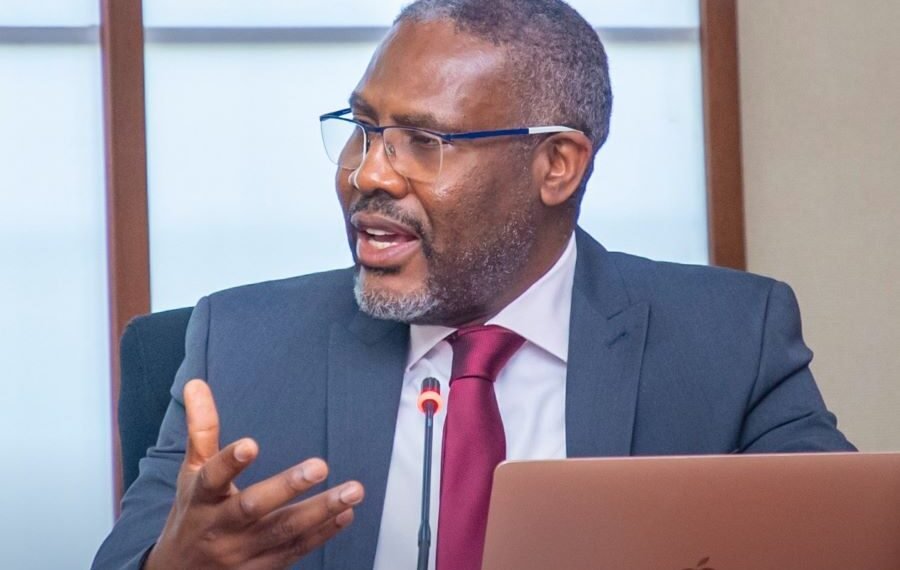
As investments in Fibre-to-the-Home (FTTH) infrastructure gather momentum across Nigeria, the Association of Telecommunications Companies of Nigeria (ATCON) has sounded the alarm over what it described as the chaotic deployment of fibre cables on utility poles.
The association warned that poor infrastructure management could undermine the country’s broadband ambitions if left unchecked.
Read Also:
The concern dominated discussions on Wednesday at ATCON’s Critical Conversation Forum on Fibre-to-the-Home (FTTH) Deployment in Lagos, where the association also unveiled the progress made under its industry-wide Fibre Infrastructure Clean-Up Project piloted in Lagos aimed at restoring order to Nigeria’s rapidly expanding fibre network.
Opening the forum, ATCON President, Mr Tony Emoekpere, acknowledged the rapid expansion of FTTH investment across the country, crediting pioneer operators such as ipNX Nigeria for helping to establish the market.
However, he warned that the industry’s impressive growth has exposed absence of clear standards governing infrastructure sharing and the management of fibre installations as major weaknesses.
“We have seen dramatic growth in broadband and serious investments in Fibre-to-the-Home infrastructure. But growth also brings new challenges,” Emoekpere said.
He questioned whether Nigeria has adequate engineering standards regulating the number of fibre cables that can be mounted on utility poles, how shared infrastructure should be managed, and whether current deployment practices are sustainable.
“If you look at many of our poles today, what you see is a spaghetti of cables. We must begin to ask ourselves whether this is sustainable as the industry continues to expand,” he said.
According to him, mobile networks alone cannot deliver the level of broadband capacity required by Nigeria’s growing digital economy, making last-mile fibre deployment inevitable.
“Mobile networks are not primarily designed to deliver full broadband. If Nigeria is to achieve its broadband targets, Fibre-to-the-Home and other last-mile fibre technologies will play a central role.”
He therefore called on operators to embrace greater collaboration and infrastructure sharing instead of duplicating investments.
“We shouldn’t wait for regulators to force collaboration. As an industry, we should be able to regulate ourselves through agreed standards and shared infrastructure,” he added.
Emoekpere’s concerns were reinforced by a technical presentation delivered by Mr Segun Okuneye, Assistant Director, Strategic Business Initiatives at ipNX Nigeria and Chairman of the ATCON Fibre Clean-Up Committee, who revealed the extent of infrastructure disorder uncovered during the ongoing clean-up exercise across Lagos.
According to Okuneye, years of network expansion by multiple operators have left Nigeria’s Outside Plant (OSP) fibre infrastructure littered with abandoned cables, damaged hardware, unauthorised attachments, poorly managed cable routing and inadequate asset documentation.
The result, he said, has been increased operational risk, more frequent service outages, higher maintenance costs, longer fault repair times and growing safety concerns.
To address the situation, ATCON constituted a special industry committee comprising mobile network operators, Internet Service Providers and infrastructure companies to undertake a comprehensive clean-up of aerial and underground fibre infrastructure across Lagos.
The pilot phase, already underway, covers major commercial corridors including Toyin Street, Allen Avenue, Opebi, Oba Akran, Kudirat Abiola Way, Ikeja, Lekki Phase 1 and Victoria Island, with participating operators deploying field engineers to remove abandoned cables, reorganise active fibre routes and restore compliance with engineering standards.
Okuneye disclosed that field inspections identified several recurring defects, including sagging fibre cables exceeding acceptable engineering limits, excessive cable loops, abandoned infrastructure still attached to poles, broken clamps and brackets, poorly secured closures, inadequate cable labelling and unauthorised third-party attachments.
The clean-up exercise also involves re-tensioning sagging cables, replacing damaged passive hardware, improving infrastructure identification, securing street cabinets against vandalism and documenting assets using photographs, GPS coordinates and route mapping.
According to him, the project is expected to improve the visual appearance of telecommunications infrastructure, reduce mechanical stress on fibre cables, shorten Mean Time to Repair (MTTR), enhance public safety and prepare networks for future expansion.
Looking beyond the current exercise, Okuneye urged operators to adopt more disciplined engineering practices by investing in GIS-enabled asset management, preventive maintenance programmes, AI-powered network monitoring, resilient network design and internationally recognised construction standards.
He also called for stronger collaboration with utility companies, road agencies and regulators to minimise infrastructure damage during public works while ensuring long-term sustainability of Nigeria’s broadband infrastructure.
The discussions underscored a growing consensus among industry stakeholders that while Nigeria’s FTTH market is expanding rapidly, future growth will depend not only on laying more fibre but also on maintaining, protecting and standardising the infrastructure already deployed.
You may like


27,685 Fibre Cuts in One Year Threaten Nigeria’s Broadband Future – Maida
-
ipNX Shines at ATCON Inaugural Telecoms Excellence Awards
-
ATCON Charts New Course to Tackle Infrastructure, Regulatory Bottlenecks, and Skills Gap
-
Beyond CNII: Telecom Experts Propose Next-level Infrastructure Protection Measures
-
Telecoms Service Disruption Looms in Lagos, Ogun – ATCON
-
Starlink Faces Regulatory Huddles in Nigeria over Price Hike


