
Telecoms
Affected Undersea Cable Cuts Now 90% Restored – NCC

Published
2 years agoon
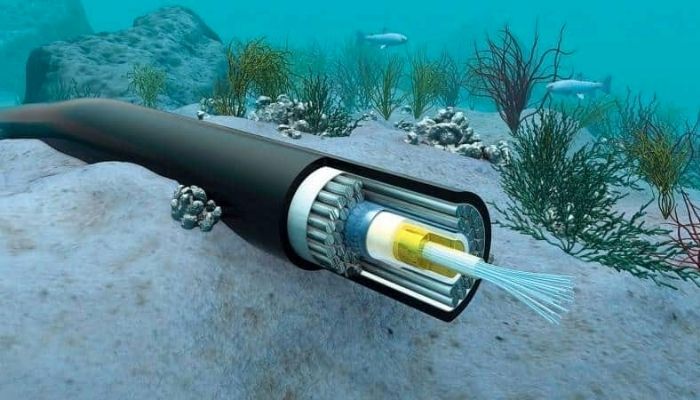
The Nigerian Communications Commission (NCC) has disclosed that undersea cable cuts that affected voice and data services in the country have now been restored to approximately 90% of their peak utilization capacities.
Recall that a widespread connectivity disruption was experienced on March 14, 2024 as a result of cuts in undersea fibre optics along the coasts of Cote d’Ivoire and Senegal, leading to downtime in voice and data services.
Read Also:
According to the NCC in a statement signed Monday by Reuben Muoka, its director of public affairs, affected operators have been able to lean on undersea cables that were not affected by the cuts.
The statement read: “All operators who were impacted by the cuts have taken recovery capacity from submarine cables which were not impacted by the cuts, and have thus recovered approximately 90% of their peak utilisation capacities.
“Mobile Network Operators (MNOs) have assured the Commission that data and voice services would operate optimally pending full repairs of the undersea cables as they have managed to activate alternative connectivities to bring back the situation to normalcy.
“We extend our appreciation to telecom consumers for their patience and understanding during the downtime caused by the undersea fibre cuts.”
MTN confirms network restoration
Meanwhile, MTN Nigeria also confirmed in a message to its customers on Monday afternoon that it services hitherto affected by the cuts were back stronger with better data speeds and roaming services.
MTN said: “Dear Customer, thank you for your patience as work continues round-the-clock on recovery efforts. Based on these, we are pleased to share that you should now be experiencing much better data speeds and roaming services.
“Please accept our heartfelt apologies for glitches you may still be experiencing with a few services and be assured that work is ongoing towards full restoration. #MTNCares”
Backstory
A combination of cable cuts, resulting in equipment faults on the major undersea cables along the West African Coast, negatively impacted data and fixed telecom services in several countries of West Africa, including Nigeria, Ghana, Senegal, Cote de Ivoire, among others.
The cuts occurred somewhere in Cote de’Ivoire and Senegal, with an attendant disruption in Portugal.
Cable companies affected were West African Cable System (WACS) and African Coast to Europe (ACE) in the West Coast route from Europe, other two – SAT3 and MainOne – had downtime.
Similar undersea cables providing traffic from Europe to the East Coast of Africa, like Seacom, Europe India Gateway (EIG), Asia-Africa-Europe 1 (AAE1) also had cut at some point around the Red Sea, resulting in degradation of services across on these routes.
As a result, internet access and speed in Nigeria and other West African countries experienced disruptions in the networks of service providers, while operators have been occupied with repairs and service restoration since.
You may like


5,000 Fibre Cuts In Six Months Threaten Nigeria’s Digital Economy — NCC
-
FG Begins 3,700 Telecom Towers Rollout in October to Expand Rural Connectivity
-
More Than 40 Million Telecom Users Could Lose Airtime Loan Access
-
NCC Reviews MVNO Business Rules as 46 Licences Issued Across Nigeria
-
NCC to Keynote Telecom Sector Sustainability Forum on Digital Infrastructure Investment Drive
-
FG Suspends Implementation of New Internet Platform Regulations


