
General
Nigeria’s Economy Showing Recovery Signs Ahead of 2027 -Sanwo-Olu

Published
2 minutes agoon
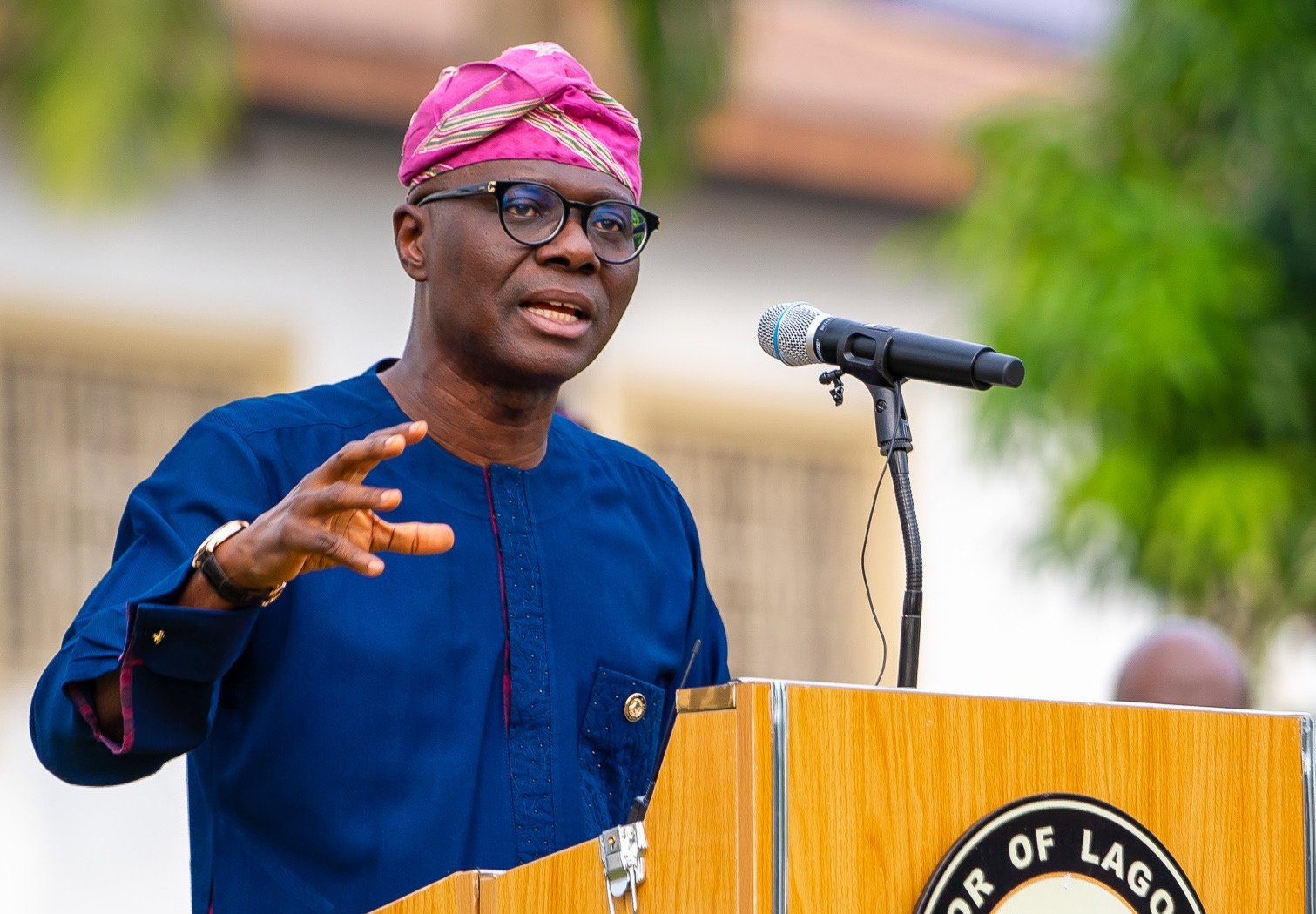
Nigeria’s economy is showing stronger signs of recovery ahead of the 2027 general elections, with GDP growth rising to 4.43 per cent, foreign reserves hitting $53 billion and formal remittances reaching a record $947 million in July, Lagos State Governor, Babajide Sanwo-Olu, has said.
Sanwo-Olu stated this on Thursday while delivering a lecture at the Freedom Online 7th Yearly Lecture held at the Sheraton Lagos Hotel, Ikeja, with the theme, “2027 Elections: Economy, Security and Nigeria’s Future.”
Read Also:
The governor said the economic reforms implemented by the administration of President Bola Ahmed Tinubu, particularly the removal of petrol subsidy, had created significant short-term pressures but were beginning to produce measurable improvements in key macroeconomic indicators.
He acknowledged that the reforms had imposed costs on households and businesses but argued that their success should ultimately be judged by whether they strengthen the economy and improve living standards.
“I will not stand here and tell you that it has been painless. It has not,” Sanwo-Olu said, noting that Lagos residents had felt the impact through higher fuel and food prices.
“But the measure of a reform is not whether it hurts. It is whether it heals.”
Sanwo-Olu pointed to the latest economic growth figures released by the National Bureau of Statistics, which showed that Nigeria’s GDP expanded by 4.43% in the second quarter of 2026, compared with 3.89% in Q1 and 4.23% in the corresponding quarter of 2025.
He said agriculture expanded by 4.39%, compared with 2.82% a year earlier, while the services sector recorded 4.6% growth.
The governor also noted that nominal GDP had increased by more than 18% year-on-year.
According to him, the broader macroeconomic picture was equally significant, with Nigeria’s external reserves standing at about $53bn, the highest level since January 2009.
He also cited the country’s trade surplus, improved sovereign credit ratings and a moderation in inflation from its peak of almost 35% at the end of 2024 to 15.9% in June 2026.
Sanwo-Olu said the naira had also remained relatively stable against the US dollar for much of the past year.
The governor highlighted the growing contribution of Nigerians in the diaspora to the country’s external liquidity.
He said formal remittance inflows reached $947m in July 2026, describing the figure as the highest monthly inflow recorded through formal channels.
The figure, he noted, was approaching the Federal Government’s target of $1bn in monthly remittances.
“These are not my numbers. They belong to the National Bureau of Statistics and the Central Bank of Nigeria, and every journalist in this hall can check them,” he said.
Sanwo-Olu said the data provided a basis for assessing the economic reforms beyond political rhetoric.
The governor’s defence of the reforms comes as the 2027 election campaign gathers momentum, with opposition parties expected to make the removal of the petrol subsidy and its impact on household purchasing power a major campaign issue.
He said the subsidy had become unsustainable and had diverted resources that could have been deployed to infrastructure, healthcare and education.
According to him, all major presidential candidates in the 2023 election had promised to remove the subsidy, but the Tinubu administration was the one that implemented the policy immediately after taking office.
For the APC, Sanwo-Olu said the strategy ahead of 2027 would be to maintain the reform trajectory while ensuring that the benefits of economic adjustment became more visible to Nigerians.
Sanwo-Olu also linked economic performance to Nigeria’s security situation, warning that insecurity could undermine agricultural output, investment, employment and voter participation.
He said farmers who could not safely access their farms would contribute less to national food production, while insecurity around schools and businesses would weaken human capital development and private investment.
“Poverty feeds insecurity, and insecurity strangles the very economy that would cure poverty,” he said.
The governor cited the expansion of the Nigerian Army, new security commands, police reforms and the deployment of Forest Guards and Mining Marshals among measures aimed at improving national security.
He also backed the proposed introduction of State Policing, drawing from Lagos State’s experience with community-based security initiatives.
Sanwo-Olu said the economic performance of Nigeria’s 36 states and the Federal Capital Territory would also influence the 2027 elections.
He argued that states had benefited from increased allocations following the removal of the petrol subsidy, with monthly allocations to states and local governments more than doubling in naira terms.
“The President has done his part; the money is arriving. What is done with it is on us,” he said.
The governor said voters would increasingly judge state governments based on tangible outcomes, including roads, healthcare, schools and other public infrastructure.
Looking beyond the 2027 elections, Sanwo-Olu endorsed President Tinubu’s ambition to grow Nigeria into a $1trn economy by 2030.
He said ambitious economic targets were necessary to provide direction for policy and investment, arguing that the country should focus on implementing reforms rather than dismissing their targets.
“There is a future beyond 2027, and it is a bright one,” he said.
Sanwo-Olu disclosed that he expects the APC to win the 2027 elections and supports President Tinubu for a second term to consolidate the administration’s reform agenda.
You may like


Security Is Becoming An Economic Cost for Nigeria’s Businesses, Lai Mohammed Warns
-
Nigeria’s Electricity, Gas Sector Posts 10.63% Real-Term Contraction in Q2 2026
-
CPPE Urges Lower Production Costs as Nigeria’s GDP Growth Hits 4.43%
-
Nigeria’s Formal Remittance Inflows Hit Record $947m on CBN Reforms
-
Moody’s Raises Nigeria’s Outlook, Cites Stronger FX Reserves, Growth
-
Atiku’s Petrol Subsidy Plan Could Cost Nigeria N19.1trn Yearly — Presidency


