
Autos
Uber Begins Robotaxi Trial in London After Quitting Nigeria

Published
4 hours agoon
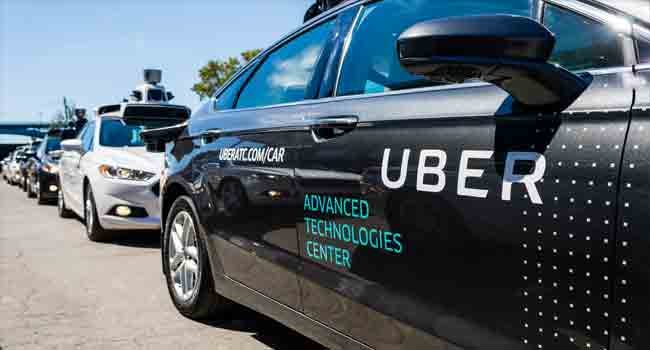
Uber has begun testing autonomous ride-hailing services in London, deploying AI-powered vehicles developed by British self-driving technology startup Wayve, a day after ending its ride-hailing operations in Nigeria.
The London trial marks Uber’s second autonomous ride-hailing deployment in Europe after Zagreb, Croatia, as the company expands its investment in self-driving mobility.
Read Also:
Fewer than 20 Ford Mustang Mach-E electric vehicles are currently available under the pilot. Each vehicle has a licensed human operator onboard to monitor the autonomous driving system while Uber gathers data ahead of a potential transition to fully driverless operations.
Customers requesting UberX, Uber Comfort or Uber Electric in selected areas of London may be matched with a Wayve-powered autonomous vehicle at no additional cost.
The London deployment follows a partnership between Uber and Wayve announced in 2024, when Uber invested directly in the British startup.
The two companies agreed to work together to deploy Wayve-powered autonomous vehicles across multiple markets, making the London trial part of Uber’s broader autonomous mobility strategy.
Sarfraz Maredia, Uber’s Global Head of Autonomous Mobility, said the launch would help the company build confidence among consumers and government authorities as it develops its autonomous mobility business.
Wayve CEO and co-founder Alex Kendall described London as a suitable testing ground because of the complexity of its roads and traffic environment.
However, fully driverless operations are yet to begin. The service still requires regulatory approval, including authorisation from Transport for London.
The robotaxi trial comes a day after Uber announced plans to wind down its ride-hailing operations in Nigeria and Uganda.
The company said the decision followed a review of its operations and was focused specifically on the two markets. Uber said it would concentrate its investments on markets where it could create greater value for drivers and provide earning opportunities at scale.
Uber’s exit leaves Bolt, LagRide and inDrive among the major ride-hailing platforms operating in Nigeria.
Bolt has taken a different position, reaffirming its commitment to Nigeria and describing the country as an important market for its growth.
Uber’s departure from Nigeria comes as rising operating costs continue to put pressure on the economics of ride-hailing.
You may like


CONTEXT: Uber Exits Nigeria After 12 Years as Global Giant Cuts 3,300 Jobs
-
Uber Rates Lagos as the Most Forgetful City in Nigeria
-
UberMoto launches in Ibadan to provide bike-hailing service
-
Uber, Bolt, other rideshare operators to see global revenue hit $12.4bn by 2022
-
Aurora acquires Uber’s self-riding unit, swells its valuation to $10bn


